Telling the “Dune: Prophecy” story through design How Territory Studio designed a technological system that adds even greater depth to the “Dune” universe.
Project Workflow and Outcome
The design team at Territory Studio used Cinema 4D and Redshift to create a captivating visual language for the HBO series “Dune: Prophecy.”
When HBO approached Territory Studio to design key technological elements of “Dune: Prophecy,” the team faced a unique challenge. Unlike most science fiction that takes place in a glossy, high-tech future, the “Dune” universe has a distinct backstory in which all “thinking machines” have been banned, including computers and artificial intelligence.
To design the technology used by the Bene Gesserit, a quasi-religious sisterhood in the “Dune” universe, Territory Studio needed to look both to the future and the past without relying on common high-tech sci-fi tropes. Using tools like Cinema 4D and Redshift, the team imagined a striking aesthetic language and UI that greatly enriched the show’s story, characters, look, and setting.
We talked to Senior Motion Designer Dan Herlihy about how the project came together and how his team developed a fresh take on futuristic technology.
Please tell us what sort of work your studio typically does.
Herlihy: We deliver high-level concept and visual development for film and premium TV, look development, UI/UX for narrative systems, environment and worldbuilding, motion tests, and VFX concept handoff.
We also work across 2D and 3D, run creative direction for sequences, and collaborate closely with VFX vendors for final execution.
More broadly, Territory Studio is a creative partner that helps organizations understand, design, and communicate increasingly complex technological experiences. We apply the same combination of storytelling, design, and technology from our entertainment work to real-world products, interfaces, and experiences, making emerging tech feel intuitive and engaging.
In other words, we make complexity understandable.
How did the “Dune: Prophecy” project come about?
Herlihy: Territory was brought in to develop the visual language for the Bene Gesserit’s technology and archive systems. The client already had some early concepts from us, but they wanted to move beyond conventional representations of data and server technology to create something more organic, more distinctive, and, of course, very specific to the world of “Dune.”
The brief really centered on how the Sisterhood might store, search through, and manipulate generations of bloodline and genetic information in a way that felt ancient and technologically advanced. We began by exploring physical family trees, sacred geometry, biological and synaptic structures, as well as historical methods of organizing information, gradually developing these ideas into an elegant, almost architectural visual system.
The goal was to create something that felt less like a traditional computer interface and more like a living, ancient library of knowledge. The result is very beautiful, regal, tactile, and deeply embedded in the visual language of the Bene Gesserit.
What specific elements did your team create for “Dune: Prophecy”?
Herlihy: Our work involved concept design, visual development, UI, and motion exploration across the Bene Gesserit’s technological systems.
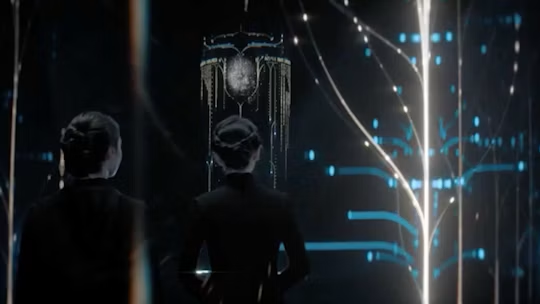
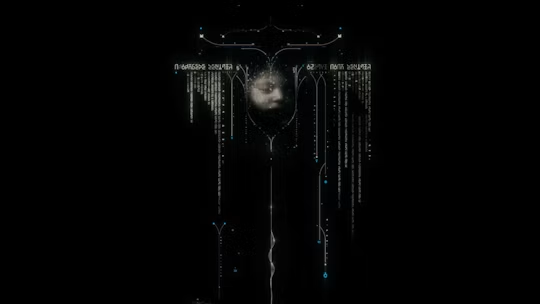
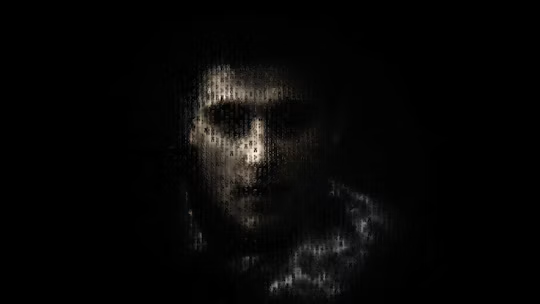
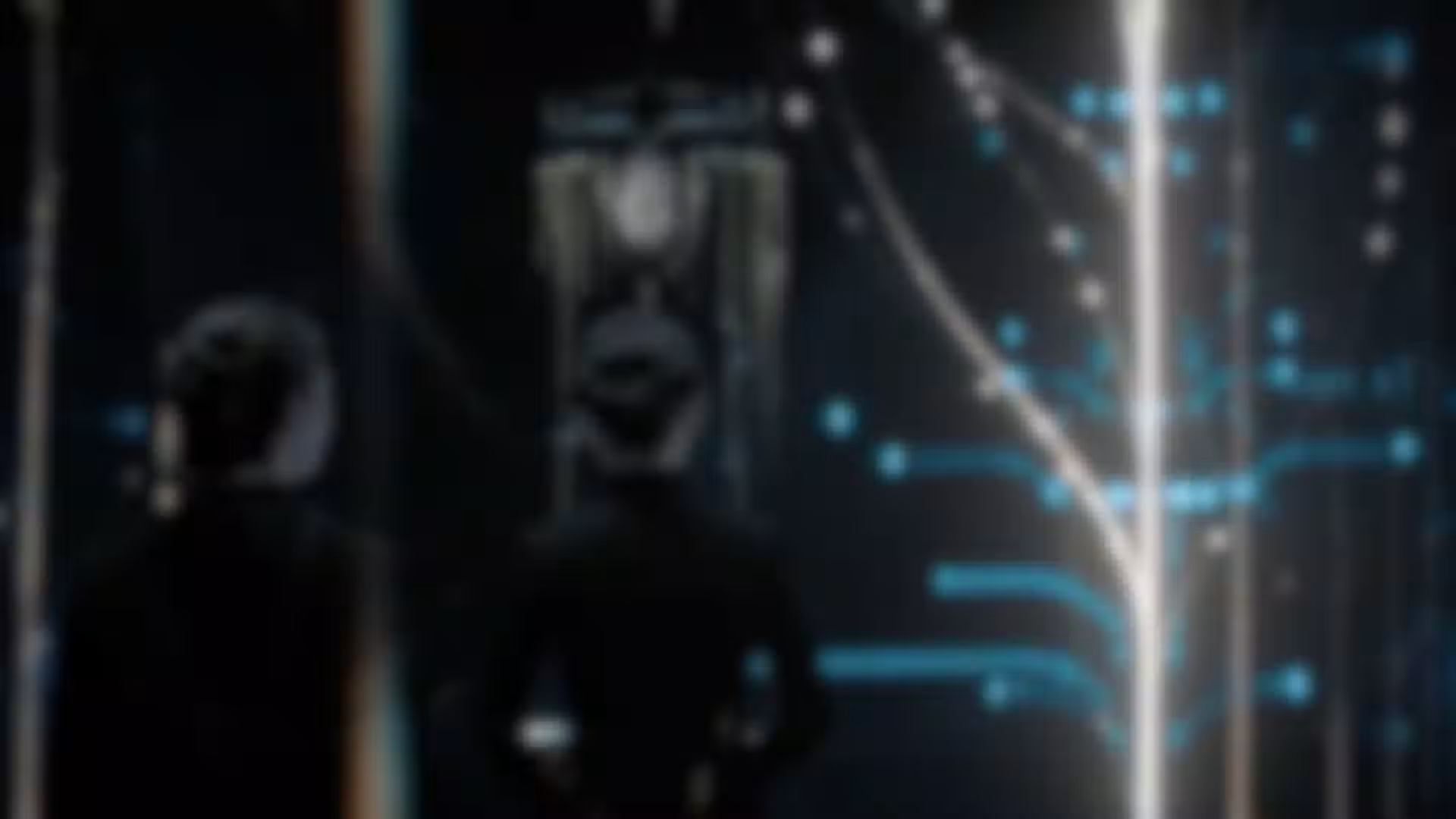
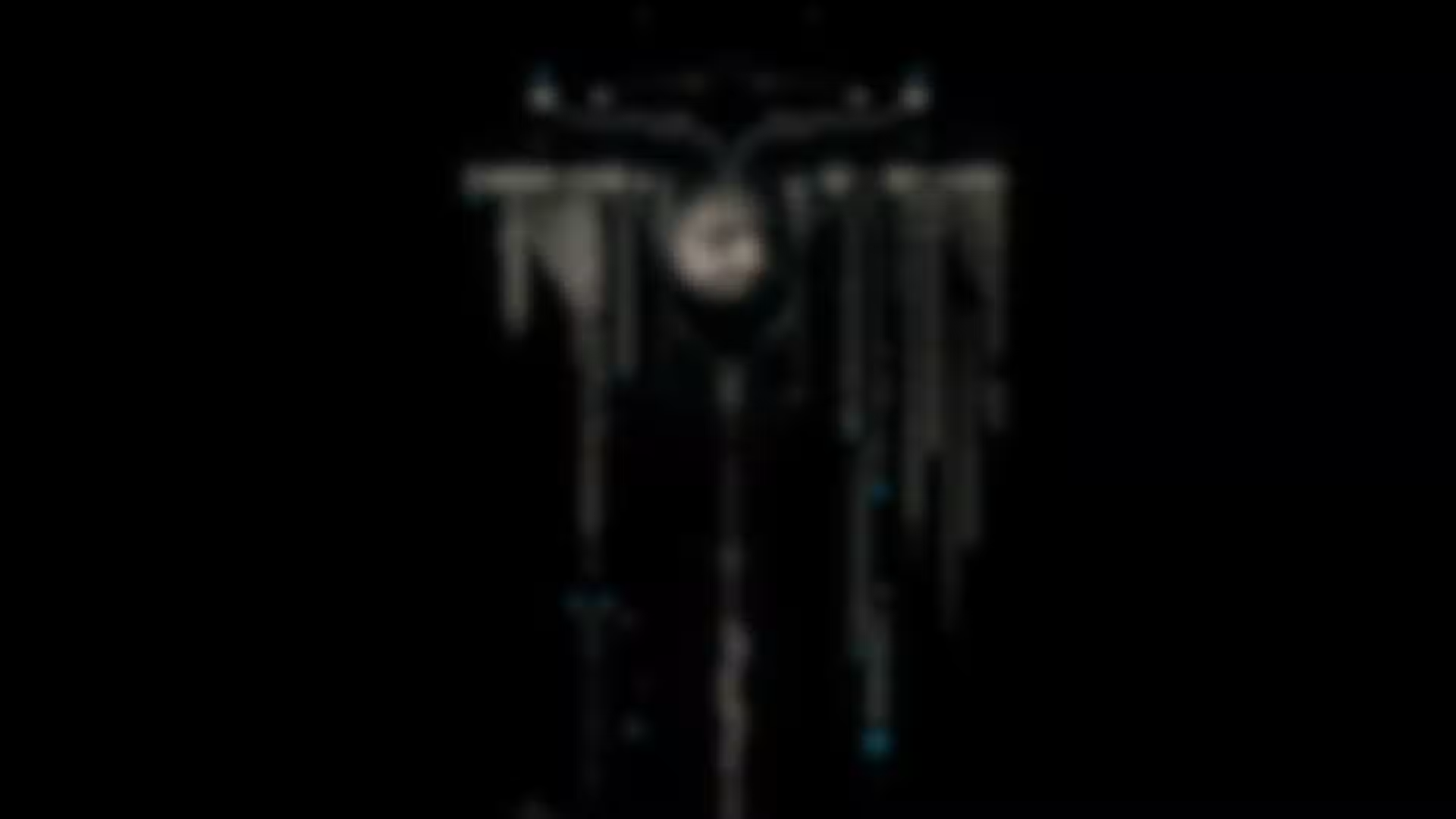
This included the Anirul, the Sisterhood’s archive of bloodline and genetic information, UI cards and information systems, synaptic linework and graphic elements, crystal reader/display devices, technology and graphics associated with the resurrection coffin, and motion tests exploring how these interfaces and data systems behaved in three-dimensional space.
We also developed assets and visual direction that the VFX teams used in the final visuals.
What influenced the look and feel of these technological elements?
Herlihy: A major influence was the idea of looking backward and forward at the same time—something we excel at as a design company. We explored sacred and ancient geometry, historical celestial mapping, even different ways information has been organized and recorded throughout history, then combined those references with biological and synaptic structures.
There was also an emphasis on physicality as it needed to feel tactile and aged rather than just digitally pristine. Mechanical references (including the precision and complexity of watch mechanisms) helped give the technology a sense of believable function.
The result combines organic forms with ordered geometry, creating a restrained, almost Art Deco look that felt appropriate to the Bene Gesserit: ancient, regal, technologically advanced… all without looking like modern-day technology.
Walk us through how your team conceived and created the Anirul.
Herlihy: The Anirul is the Sisterhood’s library containing generations of bloodline and genetic information. The question quickly became how to make that enormous body of data feel physically beautiful and understandable without representing it as conventional screens or servers.
Our earliest explorations took the idea of the family tree quite literally, using branching structures to represent generations and individual “Houses.” From there, we simplified and refined the forms into something much more architectural and elegant. The result was a golden, almost Art Deco structure that reduced the tree to its essential geometry.
Individual bloodlines became branches, allowing the Bene Gesserit to navigate generations of DNA information. Then we developed the associated UI, linework, and motion language, testing how this information could be pulled apart, rotated, examined, and restructured within the space.
The process involved moving continually between 2D design, Cinema 4D exploration, motion tests and collaboration with the client (and VFX team) until the system felt organic, ordered, and, above all, ancient yet technologically credible.
What Maxon tools were used for this project?
Herlihy: Cinema 4D and Redshift were the primary Maxon tools used on the project.
Cinema 4D was our main environment for 3D conceptual development, allowing us to quickly explore form, spatial relationships, materials, and how graphical elements would exist within three-dimensional objects and environments.
We used Redshift extensively for rendering and look development, particularly when testing materials, depth, glass, refraction, and the more tactile qualities of the designs. X-Particles was also used for some of the synaptic and particle-based experimentation.
Cinema 4D was really the backbone of the process and our primary tool for advancing the initial design concepts, allowing us to quickly determine how those ideas could actually exist in space.
What were some specific challenges posed by this project, and how did you overcome them?
Herlihy: A main one was finding the right balance between something that felt highly advanced and something that could have existed for many, many generations. The technology couldn't feel clean or conventionally digital; it needed to feel almost alive, very organic and tactile, but at the same time extremely precise and controlled.
This led us to explore synaptic pulses, particle behavior, and detailed mechanical movement to give these systems that sense of life. That’s why those references such as the inner mechanics of a watch were useful because very small movements can communicate enormous complexity and precision.
Cinema 4D and Redshift allowed us to test ideas quickly in three dimensions, experimenting with materials, erosion, depth, glass, refraction, etc., rather than relying purely on flat concept frames. Motion tests helped us understand whether a design not only looked convincing but could actually function and communicate clearly on screen.
What lessons learned on previous projects helped prepare you for this one?
Herlihy: Our experience working across cinematic UI, visual effects, and world-building meant we were already accustomed to designing technology that must serve both a narrative and a functional purpose.
Previous work within the "Dune” universe helped reinforce the importance of understanding the visual language of that world rather than simply introducing contemporary ideas of what futuristic technology should look like. There is always a balance between the analog and the advanced in much of the work, and between references that feel historically familiar yet unlike anything audiences have seen before.
More broadly, we try to stay creatively “match fit.” Motion design demands that you think simultaneously as a designer, animator, and filmmaker, so experimentation and constant prototyping are an important part of the process. This makes it possible to move quickly between ideas and tools and levels of detail as projects develop.
What aspects of the project are you most proud of?
Herlihy: The collaboration. This was a project where the design developed through a very close dialogue between our team, the client, plus the VFX artists responsible for carrying the work into the finished sequences.
What I particularly like is that our work is not there simply as decoration. We were constantly thinking about how the mechanics could support the narrative; how a system could communicate lineage and history while still feeling beautiful and believable within the story’s world. That combination of storytelling and functionality is something we always strive for, creating work that feels visually distinctive while remaining grounded in a clear narrative purpose.
Key takeaways
“Dune: Prophecy” features unconventional technology that blends futurism with ancient typography and geometry.
Territory Studio relied mainly on Cinema 4D for conceptual development and Redshift for look development.
Their work not only added visual flair to the series but played a large role in communicating the narrative.
Adam Moerder is a senior writer at Maxon.